Magnolia
Mariners' Museum, Uncurated Search Results
Type: Schooner
Year: 1869
Builder: Kirby & Lang
Location: St. Michaels
These records are found in the online catalog of The Mariners’ Museum and Park in Newport News, Virginia. Uncurated search results are presented to give researchers and interested readers an idea of whether the museum’s archives contain information about this vessel and whether it may be worthwhile to visit the museum’s catalog search page for further investigation. Uncurated results may be inaccurate or incomplete.
Search mode: Exact Name. Search phrase(s): "Magnolia". Results returned: 31. Results displayed in this table: 31.
Use these buttons to send uncurated search results to your own app or text document for further research. First, check the box for any row, or click "Select All" then uncheck any rows. Then click "Show Selections". You can then copy your selections from the text box and past them into your app.
| Fetch? | Row ID | Media | Date | Vessel | Place | Related Places | Inscription/Marks | Subject | Notes | Archive Number |
|---|---|---|---|---|---|---|---|---|---|---|
| 1 | 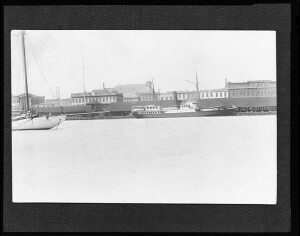 | After 1903-Before 1946 | Magnolia (Tender : 1904). | Mobile Bay (Ala.) | Eldredge Collection; Magnolia; lighthouse tender; built 1904. | Starboard view at dock. Magnolia served on Mobile Bay from 1904 until she was rammed and sunk in August of 1945. | MS0091/03.01-32#073 | |||
| 2 | 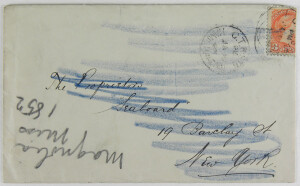 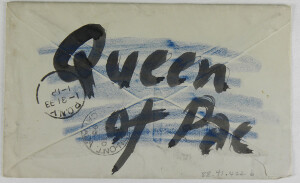 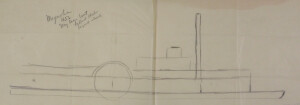 | MAGNOLIA | CL22895 | |||||||
| 3 | No image URL. | Magnolia : the new bloom. | LB90363 | |||||||
| 4 | No image URL. | Magnolia | P0001.011/01-2000 | |||||||
| 5 | No image URL. | Confederate States of America–Newspapers; Richmond (Va.)–Newspapers | The Magnolia Weekly was published in Richmond, Virginia from 1863 until 1865. | LB104281 | ||||||
| 6 | 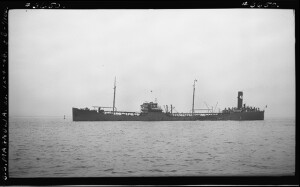 | 12/4/1948 | Magnolia (Tanker : 1935). | S.S. Magnolia. U.S. 12-4-48. f8 - 1/100. #3650. #3650. | Ships.; Bodies of water. | Broadside view of the Magnolia in midstream. | P0006/02.01-02.1398#01 | |||
| 7 | No image URL. | 1918 | Caption: "Magnolia, Mass.". | MS0003/-004.2577 | ||||||
| 8 | No image URL. | President Fillmore (Steamship : 1930).; Magnolia (Screw schooner : 1919). | Ships–Reconstruction. | President Fillmore : __reconditioned Magnolia soon to leave the yard | LB103191 | |||||
| 9 | 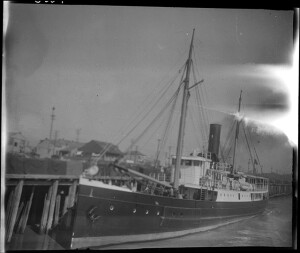 | 3/1905 | Magnolia (Tender : 1904). | Magnolia - (L.H. Tender); 5034 | Steamboats–Louisiana–New Orleans.; Government vessels–Louisiana–New Orleans. | Shows a port side view of the bow of a light house tender moored at a pier. Stanton's notebooks contain the following information about this item: "Mar 1905" | MS0094/01-#5034 | |||
| 10 | 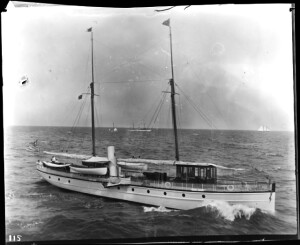 | 9/7/1893 | Magnolia (Yacht : 1883). | Magnolia - (st yacht); 115 | Steamboats–United States.; Steam yachts–United States. | Shows a starboard side view of a steam yacht making way. Stanton's notebooks contain the following information about this item: "Sep 7, 1893" | MS0094/01-#0115 | |||
| 11 | No image URL. | 1868 | Owners: Type of Incident: Explosion Location of incident: Ohio River near Cincinnati Incident Date: March 17, 1863 Casualties: 80 Dead and 60 Survivors Source(s): Illustrated London News | MS0534/-02.36 | ||||||
| 12 | 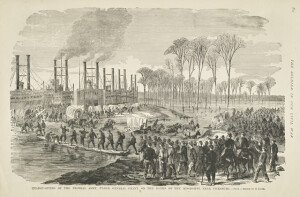 | SHORT DESCRIPTION: The print shows steamboats lined along the shore of the Mississippi River, near Vicksburg, Mississippi. There are six steamboats, and the Union troops fill the shore line. The area looks to be flooded, and the soldiers are crossing narrow stretches of water balanced on logs, some with their arms out. They are also on horseback or in covered wagons, with the water reaching the horses’ chests. NOTES: Print is from page 80 of “The Soldier in Our Civil War,” volume 2, published in 1890. The image also appears later on page 277 of “Frank Leslie’s Illustrated History of the Civil War,” published by Mrs. Frank Leslie in 1895 but is not an exact match. Mrs. Leslie was originally Miriam Florence Folline, though she added Peacock, Squier, and Leslie after various marriages. She married Frank Leslie in 1874, but he died in 1880. She then legally changed her name to Frank Leslie in 1881, which is how this book came to be published by Mrs. Frank Leslie. TEXT from 1895 “Frank Leslie’s Illustrated History of the Civil War”: “Our artist’s sketch needs no description-it explains itself. A more perfect picture of the Slough of Despond was never painted. General Grant established himself on board the Magnolia, where he superintended the entire operations. One of his aids wrote: ‘As for mud, it beats Broadway, and considerable fun is got out of the wallowings undergone by the commissariat wagons and their drivers. Frequently the men place logs at certain intervals, and crowds amuse themselves by seeing how often the log disappears, leaving the man who trusted to it up to his middle in that magnificent mud and slush, which throws even Virginia into the shade.’ The second boat to the right of the Magnolia is the hospital ship.” | CL18171 | |||||||
| 13 | No image URL. | Special literature survey ; no. 52 | Whales.; Whaling. | Cover title. | LB24953 | |||||
| 14 | No image URL. | SHORT DESCRIPTION: Pencil sketch on tissue. VESSEL INFORMATION - VESSEL NAME: I.N. SEYMOUR SERVICE DATES: 1860-1888 American wooden paddle side-wheel steamer built in 1860. She was 102 feet in length; 19 feet 6 inches beam and 7 feet 6 inches depth of hold; tonnage 133. Fitted with a Fletcher, Harrison & Co., vertical beam engine with cylinder 30 inches and stroke of 6 foot. She was owned by P. C. Schultz and used on the Hudson River as well as in New York waters. She was purchased by the United States Government October 26, 1861, for $18,000 and in February, 1862, was in the Burnside Expedition. Bought from Schultz. The I. N. SEYMOUR was turned over by the Navy to the Lighthouse Board at Washington, D. C., on June 20, 1865. Later her name was changed to that of TULIP and she remained in that service until about 18880 or '81. (169 tons) In 1882 she was known as the MAGNOLIA and her homeport was Jacksonville, FL and was in service on the St. John's River. From 1884 to 1887 her homeport was New York, although she was running in southern waters. In 1884 she was on the route between Jacksonville and Palatka with the SYLVAN GREEN. She is not listed in 1888. Alternate vessel names: (1) I.N. SEYMOUR (SIDE-WHEEL STEAMER: 1860-1861); (2) USS ISAAC N. SEYMOUR (SIDE-WHEEL STEAMER: 1861-1865); (3) TULIP (LIGHTHOUSE TENDER: 1865-1882)L; (4) MAGNOLIA (SIDE-WHEEL STEAMER: 1882-1897). | CL5984 | |||||||
| 15 | 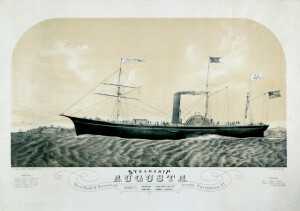 | Alternate vessel names: (1) AUGUSTA (1852-1861); (2) USS AUGUSTA (1861-1868); (3) MAGNOLIA (1868-1877). | CL19707 | |||||||
| 16 | No image URL. | Fires.; Great Fire, Chicago, Ill., 1871. | Captain Joseph Gilson : unsung hero of the Chicago fire. | LB98890 | ||||||
| 17 | 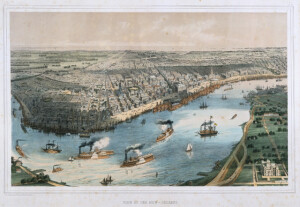 | SHORT DESCRIPTION: Lithograph by John Bachmann showing the Mississippi River's crescent turn filled with steamboats and sailing ships. Visible paddlewheel ships include Ben West, Elle Key, Magnolia, Natchez, America, and Creole. Jackson Square can be seen at the right side as well as the French Market. | CL17790 | |||||||
| 18 | 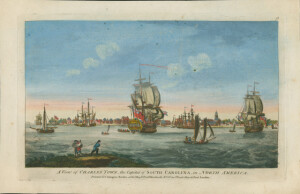 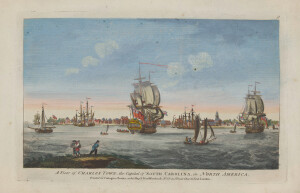 | NOTES: Taken from a group of plates entitled "Twelve Remarkable Views in North America and West Indies.", Book 19, Plate 9. A marine portrait of Charleston that appeared in the "Scenographia Americana" of 1768 is here re-engraved in a reduced format. The earlier view was incised on the plate by Pierre Charles Canot from an original painting by Thomas Mellish, a London marine painter. The artist gave so much attention to depicting the ships that the prospect of the town has been eclipsed by them. Granville Bastion can be seen at the extreme left, and Saint Philip's Church between ships at the right. Though the re-engraving is approximately half the size of the original, room was found for still another ship, added to the right of Saint Philip's Church, The perspective from across the Cooper River is the same, however, as are most details, including the presence of three fishermen hauling in nets. Mellish, who flourished during the period from 1761 to 1782, was a successful, if not a prolific marine artist. The five or so paintings he exhibited at public galleries show an admirable sense of light and distance in depicting ship-laden seas, and his work has been compared to that of the more productive English marine painter Francis Swaine. Mellish's painting of Charleston is in the Ferens Art Gallery located in Hull. A third version of this view was engraved in the mid-nineteenth century by William Keenan and printed by James S. Burges. It is inscribed "Engraved for the Magnolia by W. Keenan," and the South Carolina Historical Society reports that the copperplate for it still exists. NOTES: This is a smaller version of LE 2436. NOTES: (R. Wyatt, 5/3/2001) From: Twelve Remarkable Views in North America and West Indies, published by Carrington Bowles. SEE: LE 398, LE 399, LE 400, LE 401, LE 402, LE 403, LE 404, LE 405 | CL319 | |||||||
| 19 | No image URL. | VESSEL INFORMATION: The MAGNOLIA may have been the same vessel formerly named I.N. SEYMOUR (See Q 75). The ONLY SON was built by Thomas Collyer about 1849. VESSEL INFORMATION - VESSEL NAME: GREAT EASTERN SHIPBUILDER: SCOTT, RUSSEL & COMPANY, (Constructed under the direction of I.K. Bruel, F.R.S. D.C.L.) SHIPBUILDER LOCATION: MILLWALL, LONDON, ENGLAND VESSEL BUILT: 1858 VESSEL TYPE: STEAMSHIP ESSEL DIMENSIONS: 18,915 register tonnage, 20,150 tonnage, 692' (678') x 83' x 24'. SHIP LINE: GREAT EASTERN STEAMSHIP CO. TRADE ROUTE: JACKSONVILLE, PALATKA, ST. JOHNS RIVER VESSEL HISTORY: Paddle wheels and a single screw, speed: 13 knots. Six masts and five funnels. Launched in 1858. She was to have been called the LEVIATHAN, but was christened the GREAT EASTERN. The cost of launching the ship exhausted the owners funds, and she lay unfinished for a year. A new company was formed and they had her completed in September, 1859. Her building costs amounted to about $5,000,000. Commenced her maiden voyage for New York on June 17, l860. Her employment as an Atlantic liner was short duration. Later was used to lay the Atlantic cable. Broken up by shipbreakers in 1891 (Smith, Eugene, "Trans-Atlantic Passenger Ships Past and Present | CL17051 | |||||||
| 20 | 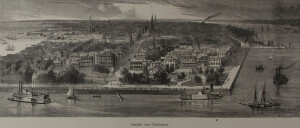 | NOTES: The same image with English title states "Charleston, from the Bay.' This image is based on the well known panorama of Charleston by John William Hill. | CL16936 | |||||||
| 21 | No image URL. | The Magnolia Series | Szczecinskie czterofajkowce : __Stettin's four-stackers. | LB101242 | ||||||
| 22 | 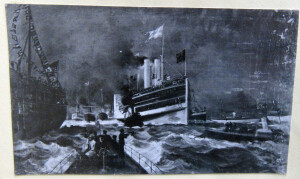 | SHORT DESCRIPTION: Black and white painting of the naval parade that took place on October 28, 1886 to celebrate the dedication of the Statue of Liberty. The steamboat Grand Republic sits in the center of the image amid a massive celebratory naval parade. The harbor is loaded with all manner of craft each decorated with flags and loaded with hundreds of people. NOTES: The book "The Uniformed Battalion of the Veterans of the Seventh Regiment, National Guard S.N.Y., 1861-1892" contains the commentary: On October 28, 1886, the Battalion paraded and took the steamboat "Grand Republic" to attend the unveiling of the Bartholdi statue of "Liberty Enlightening the World." A New York Times article of the same day indicates: The naval parade will form off West Forty-fifth-street in two divisions. First Division. United States Coast Survey steamer Gedney; Belle Horton--Brooklyn city officials; Fra Diavolo, Marion, Hitada: Fred DeBary--Cercle Français de 'lHarmonie and Woman Suffrage Association; Morrisania and Laura M. Starin--Grand Army of the Republic; Grand Republic--Veterans of the Seventh Regiment and the Brotherhood of Locomotive Engineers; Kaaterskill, H. E. Bishop, Livy, New-Haven, Magnolia, Myndert Starin, Sam Sloan, Eliza Hancox, barge J. S. T. Stranahan, and steamer N. J. Nelson. See the object file for the full article. NOTES: It is belived that this image was created as a newspaper illustration for the event but we have been unable to locate any use of the image. Newspapers checked include: Harper's Weekly, Century Magazine and Illustrated London News. We have not been able to locate the appropriate issues of Frank Leslie's Illustrated Newspaper. | CL923 | |||||||
| 23 | 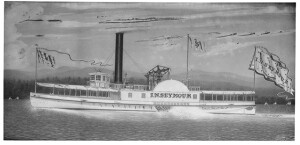 | 1883-1931 | I. N. Seymour (Side wheel steamer : 1860). | "I.N. Seymour" (1860-1888), later USLH "Tulip" (Bard) "Magnolia" | Steamboats–United States.; Paddle steamers–United States. | This is a photograph of a painting by James (and John) Bard depicting the port side of a side wheel steamer. | MS0091/03.02-02#1477 | |||
| 24 | 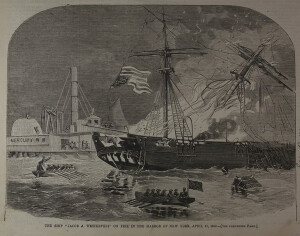 | SHORT DESCRIPTION: The print shows the ship Jacob A. Westervelt on fire in New York Harbor. The flames are burning the deck, the masts, and the stern, and one mast is in the process of falling. The American flag is upside down, and there are two rowboats and debris in the water around the ship. In the background on the left is the steam tug Mercury with a walking beam engine. NOTES: Image is from page 252 of the April 21, 1860 Harper’s Weekly. TEXT: “A BURNING SHIP We engrave on the following page a picture of the ship Jacob A. Westervelt, which was burned in New York Bay on the evening of Wednesday last. She was outward bound at the time. The following account of the disaster we condense from the Daily Times: ‘The fire originated in the between decks, aft, and was caused by the upsetting of a lamp. The carpenter had gone below, in company with a boy, for the purpose of procuring stores for the steerage passengers, eighteen in number, and while thus engaged the boy let the lamp fall; it broke, and set fire to the cotton stowed nearby, and in a few minutes the smoke was so dense as to defy the exertions of the men sent below to extinguish the flames. The Harbor Police steamboat Magnolia, with a squad of fifteen men on board, being near at hand, drawing shad-poles, immediately repaired to the ship and removed the crew and passengers, nearly all the cabin furniture, ship’s sails, some rigging, captain’s sextants and other instruments. The crews of Brazilian corvette Donna Isabel and the United States revenue cutter McLane were early on board, and in a very short time cut adrift and sent down the sails of the burning vessel, which were brought ashore by the police-boat. The steam-tugs Mercury and Samson and the steam ferry-boat Bedford, all of which have the Worthington pumps on board, were soon alongside, and numerous streams of water were thrown into the ship. The anchors of the burning vessel having been slipped she was towed ashore, between Bedlow’s and Gibbet Island, where she grounded head to the wind. This circumstance caused the fire to work forward slowly. In spite of every exertion the fire gained headway, and at 7 ½ pm the mizzen-mast fell over the stern; and at 10 ½ pm the fire had so increased that the mainmast went by the board, and the foremast fell soon afterward. At 12 o’clock the whole interior of the ship was a mass of fire, and all hopes of saving her hull had been abandoned. The vessel was scuttled where there is but sixteen feet of water at low tide. This was done at the request of one of the owners; but it proved a fatal mistake, as, had she been sunk at the point where she lay when the fire broke out, doubtless her hull would have been saved.’ Vessel and cargo are estimated at $235,000: supposed to be insured in Europe.” Other newspapers reported that it was the Sampson (not Samson) and the McLellan (not McLane), and the steam lighter Alpha was also there. The ship was built in 1849 by Jacob A. Westervelt and owned by H.L. Rich & Co. She was carrying corn, wheat, cotton, beef, bacon, lard, rice, hides, rosen, maize, rags, tea, and staves. The ship was named for and built by Jacob Aaron Westervelt, a shipbuilder and mayor of New York City. VESSEL INFORMATION - VESSEL NAME: JACOB A. WESTERVELT VESSEL DATES: 1849-1860 SHIP OWNERS: TAYLOR & MERRILL LINE | CL18095 | |||||||
| 25 | 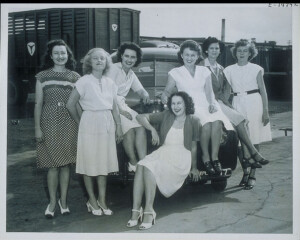 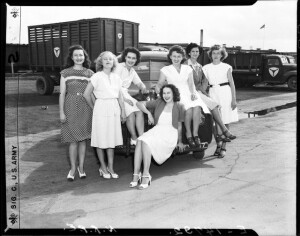 | 7/19/1945 | Left to right: Shirley Presson, 3907 S. Highland St., Norfolk, Va.; Georgia Taylor, 7237 Marcy St., Norfolk, Va.; Billie Woodard, 318 Forest Ave., Norfolk, Va.; Ruth Lowery, 1149 Magnolia Ave., Norfolk, Va., Louise Butler, 318 Forest Ave., Norfolk, Va.; Marie Pierce, 3102 Somme Ave., Norfolk, Va.; Irene Decker, 5811 Granby St., Norfolk, Va., chauffeurettes of the Norfolk Army Base Motor Pool, Norfolk, Va. Photo taken for Publicity purposes. | Chauffeurs–Virginia–Norfolk.; Transportation, Automotive–Employees.; Civilians in war–Virginia–Norfolk.; Military trucks–Virginia–Norfolk. | Group portrait of seven women posed around a car, some are sitting on top of the car others are standing next to it. Other military vehicles can be seen in the background. | P0003/01-#E-14792 | ||||
| 26 | 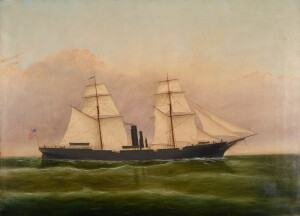 | SHORT DESCRIPTION: Starboard broadside view of the USS MEMPHIS underway. VESSEL INFORMATION - VESSEL NAME: MEMPHIS VESSEL TYPE: IRON SCREW STEAMER VESSEL BUILT: 1862 BUILDER LOCATION: DUMBARTON, SCOTLAND VESSEL DIMENSIONS: 236' X 31' X 11'5", 1038 GROSS TONS VESSEL HISTORY: The second MEMPHIS, a 7 gun screw steamer, built by William Denny & Bros., Dumbarton, Scotland, in 1861, was captured by side wheel gunboat MAGNOLIA while running the blockade from Charleston, S.C. with a cargo of cotton on July 31, 1862; purchased by the Navy from a prize court at New York on September 4, 1862; and commissioned October 4, 1862. Acting Volunteer Lt. Pendleton G. Watmough in command. Assigned to the South Atlantic Blockading Squadron, MEMPHIS sailed for Charleston and began service on October 14th with the capture of British steamer OUACHITA bound for Havana. She continued patrol through 1862 into 1863. On January 4th, she joined side wheel steamer QUAKER CITY in taking Confederate sloop MERCURY with a cargo of turpentine for Nassau. The 31st of the same month Confederate ironclad PALMETTO STATE and CHICORA made a dash out of Charleston Harbor into the midst of the blockading ships. Screw steamer MERCEDIT was rammed and disabled by PALMETTO STATE while side wheel steamer KEYSTONE STATE was next attacked and left for MEMPHIS to take in tow. The two rams then retired. By March of the following year, MEMPHIS was operating in the North Deist River, S.C. On March 6, 1864, Confederate torpedo boat DAVID attempted to run on the Union blockader. The spar torpedo struck MEMPHIS' port quarter but did not explode. After her second torpedo misfired, DAVID retreated upstream out of range of her foe's heavy guns. MEMPHIS uninjured, continued her blockading duties to the end of the Civil War. On May 6, 1867, MEMPHIS was decommissioned and sold to V. Brown Co., at New York on May 8, 1869. Renamed MISSISSIPPI, the screw steamer operated as a freight ship until May 13, 1883 when she was gutted by a dock fire at Seattle, Washington, and her wreck abandoned. RESEARCHER'S NOTES: Additional file info...Sam Davidson, 9/22/95, (captured Confederate?) artist- 3 guns thru ports, one large cannon on the foredeck- U.S. flag at stern, very odd funnels, three in line of descending height, another laterally. ** | CL12666 | |||||||
| 27 | 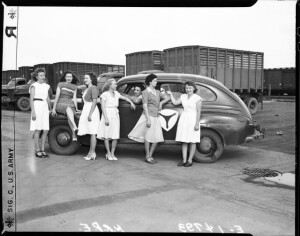 | 7/19/1945 | Left to right: Georgia Taylor, 7237 Marcy St., Norfolk, Va.; Ruth Lowery, 1149 Magnolia Ave., Norfolk, Va., Louise Butler, 318 Forest Ave., Norfolk, Va.; Billie Woodard, 318 Forest Ave., Norfolk, Va.; Irene Decker, 5811 Granby St., Norfolk, Va., Marie Pierce, 3102 Somme Ave., Norfolk, Va.; Shirley Presson, 3907 S. Highland St., Norfolk, Va., chauffeurettes of the Norfolk Army Base Motor Pool, Norfolk, Va. Photo taken for Publicity purposes. | Chauffeurs–Virginia–Norfolk.; Transportation, Automotive–Employees.; Civilians in war–Virginia–Norfolk.; Military trucks–Virginia–Norfolk. | Group portrait of seven women posed around a car, one is shown in the driver's seat, another is sitting on the hood, the rest are standing next to it. Other military vehicles can be seen in the background. | P0003/01-#E-14793 | ||||
| 28 | SHORT DESCRIPTION: Port broadside view of the Empire Line for Savannah steamship SAN SALVADOR. The ship carries a half brig or hermaphrodite rig. A pilot boat is approaching the stern of the vessel at the right. A "1" on the sail is the pilot boat's only identifying feature (could be any number of pilot boats numbered 1 or 10-19, most likely a New York or New Jersey pilot boat). The ship is flying the house flag of Garrison & Allen (the red letters G and A appear on opposite sides of the blue saltire, white field) and the Empire Line for Savannah. A full rigged American ship sits at the San Salvador's bow. She's flying a white flag with red cross from her main mast. The seas are rough and the tops of the waves are being scattered by the wind. Crew members are around the foremast in the act of taking in the ship's sails. The fore topsail is loose and flying and the foresail is reefed. The skys are gray but the sun is peaking through the clouds at the top right. NOTES: [Jeanne Willoz-Egnor, 1/5/2021] The first voyage I could document for San Salvador occurred late in 1865. The ship was sold to Central Georgia Railroad in 1872 so I set a date of 1866-1872 for the creation of the painting. There are two very similar paintings of the same ship/scene by Buttersworth, one in a private collection and another sold at Christies in 2009 and again at Northeast Auctions in 2013. The painting in private hands, like our painting, shows the pilot boat with a "1" on the sail. The painting sold at Christie's depicts the pilot schooner with a "10" on the sail. VESSEL INFORMATION- VESSEL NAME: SAN SALVADOR VESSEL DATES: 1859-1880 SHIPBUILDER: HARLAN & HOLLINGSWORTH SHIPBUILDER LOCATION: DELAWARE, WILMINGTON ALL SHIP'S NAMES: (1) S.R. SPAULDING (SIDE-WHEEL SCHOONER: 1859-1864), (2) SAN SALVADOR (SIDE-WHEEL HALF-BRIG: 1865-1880). VESSEL HISTORY: American iron hull side wheel steamer built by Harlan & Hollingsworth at Wilmington, Delaware, in 1859 for the Merchants & Miners Transportation Company. She was 210 feet over all, 33 feet diameter, and 15 feet 6 inches depth of hold, tonnage 1500. Verticle beam engine having cylinder 56" by 11' stroke of piston. She was built for the service between Baltimore and Boston. She was sold to the US Government and used as a transport during the Civil War. At the close of the war in 1865 the ship was purchased by W.R. Garrison for Garrison & Allen's Empire Line. The Central of Georgia Railroad acquired the the Empire Steamship Line in 1872 and named the line Empire Line of Savannah. When the Central created the Ocean Steamship Company (or Savannah Line) in 1874, it consisted of ships acquired from several lines. These included the Augusta (renamed the Magnolia) of the Mitchell, the Empire's San Jacinto and San Salvador, and the Atlantic Mail steamships Herman Livingston, General Barnes and the Rapidan. In 1878 sold to John Roach & Son as part payment for new building. Resold to George McCulloch, New York, 1880 (this is backed up by American Lloyd's Register of American and Foreign Shipping of 1880). The Morning News of Wilmington, Delaware of September 8, 1880 reports "the iron steamer San Salvador, which left Truxillo on the 7th ultimo for Havana, has not since been heard from, and it is feared by Laycroft & Co., her agents in Philadelphia, that she was lost in the storm that overwhelmed the Vera Cruz. She was owned in London...About two years ago she was sold to parties who purt her in the cattle trade between Central America and Havana." The New York Times of September 7th reports the ship was lost in the Caribbean Sea and "a cyclone is said to have raged in the Caribbean Sea about the 9th of August and it is possible she went down in this storm." | CL4600 | ||||||||
| 29 | 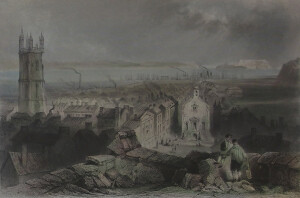 | SHORT DESCRIPTION: The image depicts the town of Cardiff in Wales. Houses and buildings stretch toward the Bristol Channel with the spire of St. John the Baptist City Parish Church on the left. There is a building that is almost highlighted in the print, sitting in the middle of the street with two sets of stairs. The city has several smoke stacks and there are numerous sailing ships lining the waterfront in the distance. Beyond the waterfront is Flat Holm Island. In the foreground there are two men on a building, one sitting on a wall and one standing and holding something. NOTES: The image is from after page 124 of volume 2 of “The Ports, Harbours, Watering-Places, and Coast Scenery of Great Britain," published by George Virtue in 1842. (TMMP Library DA625 .F49 Rare) The book was first published in 1838 by Charles Tilt with descriptions by William Andrew Chatto. It was then published several times in 1839 and 1842 by George Virtue, and later after 1855 by Virtue & Co. under George’s son, James S. Virtue. The name also changed slightly, but kept the "Ports, Harbours, and Watering Places" part of the title. The books that the Virtues published kept Chatto’s descriptions for the first volume, but they expanded the book to two volumes. William Beattie wrote the text for the new second volume and an appendix added to the end of the volume 1. NOTES: From the end of the 1842 edition of Volume 2: “In taking leave of these two Volumes, illustrating the Ports, Harbours, Watering-places, and Coast Scenery of Great Britain, a few words of explanation appear necessary. The work was originally commenced by Messrs. Finden [William and Edward], and for some time carried on with all the taste and spirit characteristic of these distinguished Artists. But the remuneration accruing from the sale being found inadequate to defray the expenses incurred in its production, it was offered to the present Publisher, who readily saw the improvements of which it was susceptible and became the purchaser. Arrangements were then made for its continuation. Mr. BARTLETT, whose illustrations are so familiarly and favourably known to the Public, set out on a tour of observation along the northern coasts of England and Scotland; and, after visiting every locality indicated, returned with a portfolio of drawings taken on the spot. These were immediately placed in the hands of eminent engravers; a re-issue and continuation of the work were announced; and it is gratifying to state, that the reception which it has since met with from the Public has been most liberal. With regard to the letterpress descriptions, I beg it to be expressly understood that the labours of my pen have been confined to the Second Volume and the Appendix of Vol. 1. The First Volume was written under the signature W.A.C. - prior to my connexion with the work; and, in justice to that author, I feel it at once a duty and a pleasure to conclude the work with this statement. William Beattie, M.D.” January 1842 J. Rickerby, printer, Sherbourn Lane NOTES: St. John the Baptist City Parish Church was built in 1180 as a chapel of ease for St. Mary, which was built around 1107. St. John’s has been renovated and expanded over the years but remains a medieval structure An excerpt from “The Ports, Harbours, Watering-Places, and Picturesque Scenery of Great Britain” about the print. “The county of Glamorgan, of which the principal town is represented in the accompanying plate, abounds in historical sites well adapted for the pencil, and furnishing the reader with many interesting facts and traditions. The southern portion of the county is remarkably fertile, highly cultivated, and presents to the stranger a long succession of luxuriant corn-fields, verdant pastures, and animated pictures of rural happiness and independence. It would be difficult to find any tract of land in Great Britain that can surpass the Vale of Glamorgan in richness of soil, or in soft and graceful scenery. This favoured region extends the whole length of the county-from the base of the mountains on the north to the shore of the Bristol Channel on the south-west. It presents throughout a most gratifying proof of what may be accomplished by judicious management, when soil and climate are both in favour of agricultural operations. As fair proof of the mild and salubrious nature of the atmosphere, we need only observe that the magnolia, the myrtle, and other delicate exotics, not only live but flourish in this auspicious climate. Equally favourable to health and longevity, this district has numerous living testimonies in the vigorous health and protracted age of its inhabitants, who are fully sensible of the blessings they enjoy. The valley, at its greatest breadth, measures about eighteen miles; in various places, however, it is contracted into less than half of this space, and presents in its outline a constant variety of picturesque and graceful windings. The town of Cardiff is built on the eastern bank of the river Taff, over which there is a handsome bridge of five arches, leading to the Swansea. It is a thriving town, possessing considerable trade; and, by means of a canal from the Pennarth to Merthyr-Tydvil, has become the connecting medium between these extensive iron-works, and the English market, and is, in fact, the port of the latter. The Taff, which falls into the sea at Cardiff, forms a principal outlet for the mining districts of Glamorganshire, the produce of which hitherto found its way to the market through the Glamorganshire canal; but its sea-locked, constructed about fifty years ago, has long been found inadequate to the demands for increased accommodation, in consequence of the great prosperity of trade since the canal was opened. The Marquess of Bute, possessing lands in this neighbourhood, obtained, in 1830, an act for constructing a new harbour, to be called the Bute ship-canal, and completed the work at his own expense. The great advantages of this enterprise are- a straight, open channel from Cardiff-roads to the new sea-gates, which are forty-five feet wide, with a depth of seventeen feet at neap, and thirty feet at spring-tide. On passing the sea-gate, vessels enter a capricious basin, having an area of about an acre and a half, sufficient to accommodate large trading-vessels and steamers. Quays are erected along the side of the canal, finished with strong granite coping, exclusive of the wharfs at the outer basin. This great work was finished in the summer of 1839, at an expense to the proprietor of three hundred thousand pounds. Cardiff Castle, which stands insulated on a high mound of earth, was partially restored and modernized by the late Marquess of Bute. This ancient fortress is connected with several interesting events in history. In one of its towers, or dungeons, Robert Duke of Normandy was twenty-five years imprisoned by his younger brother, Henry the First, who had previously usurped the throne and deprived him of his eyesight. In the reign of Charles the First it was bombarded by the Parliamentary forces during three successive days, and only surrendered in consequence of treachery on the part of the garrison.” | CL16339 | |||||||
| 30 | 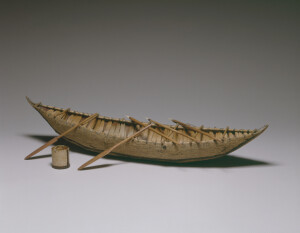 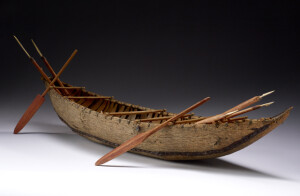 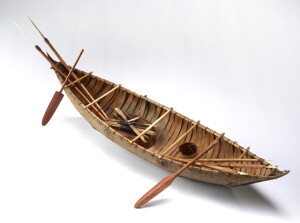 | SHORT DESCRIPTION: Model of beech bark (winteri darwini) canoe used by the Yaghan peoples of Tierra del Fuego. The canoe is outfitted with a sand platform and burned sticks to replicate the fire place, a bark bucket,three harpoons for hunting seals and two spears for fish, and two paddles of two different styles. NOTES: One of the paddles is marked "Fuegan, after FR. Ratzel, Völkerkunde" which indicates that Adney used Völkerkunde, published by Dr. Friedrich Ratzel in 1894 to create the models of the Tierra del Fuego canoe and its accoutrement. Page 519 shows a scene of a canoes like MP 151 with paddles and spears. Page 523 shows a very similar bucket. Adney also seems to have used Plate XXXI from the publication 'Mission Scientifique du Cap Horn, 1882-1883, Tome VII, Par P. Haydes and J. Deniker, Paris, 1891,' as a reference for creating the model and its parts. Notes from the english edition of Ratzel's work, titled "The History of Mankind": • the isolated Fuegian families keep almost entirely to the coast • the names Tierra del Fuego and Fuegian are explained in two ways: either from the fires which, owing to the cold, the people always carry in their canoes, or from the fires on land • These destitute shores are inhabited by a scanty population, whose entire numbers cannot be estimated as more than 15,000. The majority live on fish, and therefore settle on the coast. • To the Fuegian, his canoe is almost more important than his hut; for in it he usually spends the greatest part of his day, and often enough day and night as well. • The Yaghan boats, are made of birch bark, carelessly fastened by ropes of rush. As they are not watertight, the occupant has to be always baling. At evening the boat is hauled ashore. • Two paddles with broad blades propel the always leaky canoe; a young woman steers, an old one bales. A clay fireplace amidships is hardly ever absent. • The weapons are largely of a sort adapted to the pursuit of sea-lions and large fish. The harpoon shaft is 8 to 10 feet long, of beech or magnolia wood. The fore part, which is thickest, carries a head of whale's bone, attached to which is a line 12 fathoms in length, with seals' bones threaded on it. • The fish spear, about 10 feet long, made of the same woods, has a long sharply toothed bone for its head. NOTES: [text from "Bark Canoes: The Art and Obsession of Tappan Adney" by John Jennings] page 116: Tierra del Fuego Beech Bark Canoe. Based on a model brought back by a missionary of the Church of England. The model represents the now obsolete canoes of the Yaghan people, who made canoes using three pieces of bark from the Patagonian beech tree and, it was seem from Adney's notes, an inner layer of Winter's bark, named after an early explorer. Adney has used white maple bark instead of beech. The inwale is probably lashed with rawhide. The numerous thwarts are merely lashed down to the inwale. There are no stringers under the almost continuous ribs. It looks as if there is a second layer of bark under the jumble of ribs. NOTES: Adney's writes of this canoe: Two large models were secured by the Antarctic expedition of Capt. Wilkes and are now in the Smithsonian collection. In the middle of the canoe are some stones with heads of shells and sand, on which is a hearth where they make their fire, keeping it up with branches and sticks. Belong to each canoe are several jars, such as those before described [not sure where this description is] of a birch-like bark which serve to throw out water which makes its way into it [into the canoe]. Among their hunting implements were bows with arrows with heart-shaped flint tips and feathered; a throwing-stick for a javelin; a dagger of bone very sharp tied to a pole two years long for killing seals. NOTES: Tierra del Fuego bark canoe with equipment for spearing sea animals, and fire-place for cooking. This type of boat now obsolete; replaced by dugouts. The area around Tierra del Fuego contains thousands of intricate waterways and islands that have been described as “an inconceivable labyrinth of tortuous, storm-swept waterways…swift icy currents of the southern oceans flowing through sunken valleys.” The weather has been described as 300 days of rain and storm while the other 65 were described as “not pleasant.” The Yamana/Yaghan are the indigenous people whose traditional territory is the Isla Grande de Tierra del Fuego and Cape Horn region. They have inhabited the region for at least 10,000 years. The Yaghan were traditionally hunter-gatherers who used canoes to travel between islands and collect food. The men hunted sea lions and the women dove in the 48° water to collect shellfish. The climate they live in was quite harsh leading Yaghan to keep warm by huddling around small fires, both on land and in their boats. The many fires seen by Magellan led to naming the location Tierra del Fuego (land of fire). Despite the extensive use of fire, the Yaghan were famed for their complete indifference to the bitterly cold weather spending most of their time completely naked. Europeans even saw them sleeping on the bare ground unsheltered and unclothed. Because of the nomadic lifestyle they had very few possessions and no chiefs or organized government. Their numeric system includes the numbers 1, 2 and 3, counting on fingers, and for numbers past ten they use words for “many” and “very many”. The use of numbers is usually limited to the number of wives a man has (usually not more than three) or to indicate the number of families, which is usually computed by the number of canoes. NOTES: From: Terence T. Quirke, Canoes the world over. pages 88-90: The Yaghan Indians of the Straits of Magellan and of Tierra del Fuego, a terribly depressed and underprivileged tribe, have achieved a really notable bark canoe. None of these bark-built canoes are still being used, but there are pictures and models preserved in museums. The canoe was built out of three, five, or more cigar-shaped pieces of bark sewed together with whalebone, sealskin, or strips of twigs. The cracks between the joined edges were caulked with rushes and resin. The bard was cut form the evergreen beech [winteri darwini]. This tree has a bark about one inch thick and is exceedingly stiff. But the Yaghan Indians used to cut or chip off the outer rough bark and scrape away the soft inner bark, leaving a strong tough sheet about one-quarter inch thick, which they put on the canoes. The bark strips had to be cut very carefully to patterns; otherwise the canoe could never have a suitable shape. The sides of the canoe were made hight and slightly flaring in order to turn the rough seas. The bark was strengthened with a split sapling for a bulwark along each side, to which were attached, by whalebone lashings, closely spaced bow-shaped saplings for the ribs, which of course were requisite to maintain the shape. Across the top were lashed a number of crosspieces of lena dura wood as thwarts, generally six or more, which added greatly to the rigidity of the whole. The Yaghan Indians made a lashing between the pointed ends and the nearest thwart, which served to hold the tip of each end to the framework and to hold the bark pieces together at the end, where at least three sections join. There appear to have been no stem or stern pieces to give the pointed ends any protection beyond that provided by the strength of the bark. The bark had to be stripped from the trees when the sap was running (October or November in Tierra del Fuego), which caused the bark to become loose. A canoe ordinarily lasted less than six months. The canoe was round bottomed, and had a marked sheer; that is, it curved upward all along to the very end. The ends stood definitely above the level of the center of the canoe, the whole craft conforming somewhat to a half-moon shape. This made necessary the use of paddles about seven feet long, to reach from the high gunwale down to the trough between waves from either end of the canoe. When a landing was made, the canoe was brought to the beach bow on, and the man of the family went ashore first. His duty was to make a fire while the rest of the family unloaded the canoe. Then the wife threw ashore her clothes and paddled the canoe to the nearest bed of seaweed. She wrapped a strong strand of seaweed to the handle of the paddle, thrust the paddle handle under the thwart, and swam ashore. The blazing fire warmed her and she was then ready to dress and prepare food for the family. The beech bark is rather brittle, and the beaches of the Straits of Magellan and of Tierra del Fuego are covered with coarse gravel that is sure to smash a canoe in case the waves dash it on the shore. Thus, the precious canoe was safely moored at sea. The men watched the weather signs and in calm spells ventured far out to sea to follow the porpoises and to hunt seals. Only when stormy weather persisted did the Yaghans seek shelter on land, for they were more likely to starve on land than at sea. Some writers state that the Yaghans in their bark canoes used to hunt and kill whales. I think it quite wonderful enough that they could kill and recover the carcasses of porpoises. The Yaghans were people without social ambitions and really followed the simple life. Clothing was used solely for protection against rain and cold. They usually rubbed themselves with oil or grease to shed the rain and to help conserve the natural warmth of their bodies. Everywhere they went they carried fire. On land they always kept a fire burning, and even in their canoes they made an earthen fireplace to keep themselves warm. This practice of keeping fire burning to gave their country its first European name--Tierra del Fuego, "Land of Fire." The advantages of the beech-bark canoe to primitive people like the Yaghans were very great. For the most part they had no steel tools, and ordinarily used shell or obsidian knives. With such tools they could fell large trees only by great labor, but they could easily strip off bark and cut and split the saplings required for the framework. The use of whalebone for bindings is reported by almost all observers; the Yaghans either got the whalebone from stranded carcasses or else they actually did hunt and kill whales. NOTES: A Voyage Towards the South Pole Performed in the Years 1822-1824. Containing an Examination of the Antarctic Sea...and A Visit to Tierra Del Fuego with a Particular Account of the Inhabitants, by James Weddell, page 162-163: I considered that...one of the Fuegian canoes might be useful, and I, therefore, set about purchasing a new one from them...I ordered it hoisted in, and was surprised to find it heavy; but in getting it on deck, I found a platform of clay, the whole length of the bottom, about six inches deep: this was intended as ballast, and to preserve the bottom against the fire, which they constantly keep in the clay. The length of this canoe was twelve feet four inches, and at the broadest part two feet two inches: it was built of a strong birch bark, which appeared broaded than the trees of this neighbourhood afforded, and was probably procured from the interior. Three pieces comprised the whole vessel, one piece formed the bottom, and two the sides; all sewed together with tough twigs. The ribs or timbers were of a semicircular form, and placed with their flat sides downward, and in contact with each other, in a vertical form; so that, with the cement of clay, the canoe is rendered strong and capable of going against the wind at a quick rate. The internal arrangement of compartment seems orderly. The fishing utensils occupy the first division; in the next sits the female, who uses the foremost paddle; the third division is occupied as the fire-place; the fourth is the baling well, where the water is collected to be thrown out; and next follows the place where the men sit; in the fifth division sits the female, who uses the after paddle; and last of all is the after-locker, in which they keep all their valuables. Their spear poles are generally placed projecting over the stern. ADDITIONAL INFORMATION: See Quirke, Terence T. Canoes the world over. pages 88-90. The University of Illinois Press. Urbana. 1952.(VM 352 Q 5); See Charles Darwin, A Naturalist's Voyage Around the World, Chapter 10, description of people and environment, not much on canoes. See A Voyage Towards the South Pole Performed in the Years 1822-1824. Containing an Examination of the Antarctic Sea...and A Visit to Tierra Del Fuego with a Particular Account of the Inhabitants, by James Weddell, London 1827. See Narrative of the surveying voyages of his Majesty's ships Adventure and Beagle : between the years 1826 and 1836, describing their examination of the southern shores of South America, and the Beagle's circumnavigation of the globe, F2936 .F5 1839 Rare, for images of native peoples. See Mission Scientifique du Cap Horn, 1882-1883, Tome VII, Par P. Haydes and J. Deniker, Paris, 1891. See Völkerkunde, by Professor Dr. Friedrich Ratzel, Leipzig and Wien, Bibliographiches Institut, 1894 and english edition The History of Mankind, Volume II, MacMillan and Co. Ltd., London, 1897, pages 84-91. INVENTORY: Two (2) oars, three (3) harpoons, two (2) spears, basket, fire materials, sand. There are ten (10) component parts. These are items associated with this canoe. Please see Component Parts supplemental record for additional information. | CL14463 | |||||||
| 31 | 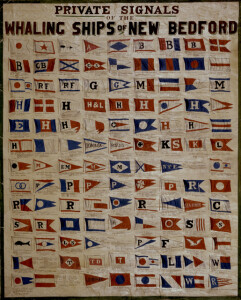 | SHORT DESCRIPTION: Oil painting on canvas by C. Newton titled 'Private Signals of the Whaling Ships of New Bedford.' There are many company/merchant flags shown with the names of their vessels and dates of operation underneath each flag. Looking at the dates of the vessels the painting appears to have been created sometime in the 1840s and received modifications as new ship's were added to each. There do not appear to be any entries made after 1869. NOTES: For information, see New Bedford Whaling Museum finding aids. Newspaper and other references found in object file. Gideon Allen and his brother, William, were whaling agents and investors from 1830 to 1887. Philip Anthony worked as a ship chandler and sold hardware at 91 Union in the 1841 New Bedford City Directory. He owned ship Menkar from at least 1845 to 1854. James Arnold was a merchant at Rotch's square. He owned the ship Cambria, which transported Frederick Douglass in 1847. George F. Barker and Abraham Barker were merchants at 117 Union in the early 1840s, also sold provisions and groceries from that address. Chapman & Bonney existed in at least the 1850s. In 1854 they purchased the schooner Union to be rigged as a brig and used in the North Atlantic whale trade. In 1859 their sail lofts burned in a fire. Coggshall should be spelled Coggeshall Cook & Snow was a partnership between Thomas Cook (1801-1890) and Loum Snow that began in 1828. They were wholesale and retail dealers in dry goods, merchant tailors, and outfitters, but also became involved in whaling trade. Snow left the partnership in 1859 and started his own company; his son joined him in 1867 to create Loum Snow & Son. Cornell & Penniman are listed in this painting as agents for bark Eliza in 1857, they were still agents for her in 1860. Oliver & George O. Crocker were brothers. In 1841 the firm of George O. Crocker & Co. had George T. Baker and Oliver Crocker as partners, and David Crocker as a laborer. They were merchants operating from 7 Commercial wharf. By 1843 the partnership between Baker, Crocker, & Co. of Boston and George O. Crocker & Co. of New Bedford had dissolved, leaving Baker to partner with Edmund Whitney to create Baker & Whitney selling sperm oil, candles, and other general commission business from their stores at 80 and 84 Water Street, which had been the address for Baker, Crocker, & Co. See The Boston Post, February 6, 1843. Elisha Dunbar & Co. was a partnership between Captain Elisha Dunbar and Edward C. Jones. Elisha Dunbar married Ann Howland in 1820, the daughter of John Howland Sr., who built them a house at 46 South Street. Edward Coffin Jones began his career as a stock boy, who worked his way up to being a ship owner and partner. When Dunbar died in 1839 Jones continued the firm alone. William Watkins worked for the company before starting his own (see below). John P. Knowles worked as a partner with T. & J.P. Knowles with Thomas. By 1887 The Boston Globe reported that John P. Knowles 2d was a ship merchant who was in debt. In 1890 the newspapers reported him as an insolvent debtor paying 40 per cent dividend. T. Knowles & Co.: Thomas Knowles worked with John P. Knowles and Joseph Knowles in th 1849 directory as dealers in groceries, provisions, dry goods, etc. at 24 Union. Jos Dunbar & Co. was Joseph Dunbar, a mercantile and whaling agent company. Henry F. Thomas (born 1824) worked for his father then joined Dunbar as a clerk and worked his way up to being a partner in 1845. He took control from 1850 to 1875. The company is listed in the 1836 and 1841 directories located at 9 Middle with Asa T. Lawton as a partner. Rodney French (1802-1886) was a quaker and merchant. He was an abolitionist who supported the Civil War. He won the 1853 mayoral election for New Bedford and a street in New Bedford is named Rodney French Blvd in his honor. William Gifford was a whaling agent for the ships Charles Drew, Minerva, and bark William Gifford. His son, Charles H. Gifford, became a partner and the company name became William Gifford & Son. William died in 1866 and Charles continued the company for a few years. Lawrence Grinnell was a whaling agent who began his career in the counting room of Fish & Grinnell in New York (which later became Grinnell & Minturn, see QO 1030 and QO 1024). He returned to New Bedford to work as a whaling agent, sold sperm oil and candles, and worked with the Mutual Life Insurance Company of New York. Hathaway & Luce was a partnership between William Hathaway Jr. (1798-1885) and Matthew Luce (circa 1802-1852) in 1838. Hathaway was a sailor who became master, and was well traveled. When he partnered with Luce they worked as agents and commission merchants until Luce died in 1852. Hathaway continued the company until the Civil War when he sold several ships and had a few captured by the Confederates. T.S. & F.S. Hathaway was Thomas Schuyler Hathaway (1796-1821) and Francis S. Hathaway (1803-1869). Their father, Humphrey Hathaway (1765-1821) was a ship builder and involved in the whale oil industry. A third brother, Nathaniel, was also a partner until his death in 1836; two of his sons became partners later in life. A.H. Howland was Abner Howland, whose family was very active in the New Bedford whaling industry and also very wealthy. He is a nephew of John Howland Sr., and Abner's home still stands at 22 South Sixth Street. Edward Wing Howland was a whaling agent, owner, and also outfitted whaling vessels in partnership with his brother, Cornelius, and his nephew, George Howland Barney. Edward died in 1879. George & Matthew Howland: George Howland Sr., was a whaling agent who eventually owned nine whaling vessels, a counting house, a wharf, a candle factory, stores, houses, and land. His daughter used his home at 245 Walnut Street to educate fugitive slaves. The home was built as a wedding gift in 1811, and on the wedding day George and his wife Susan watched the launch of the ship George & Susan from their front porch. Frederick Douglass worked for him as a young man. Lemuel Killock & Son should be spelled Lemuel Kollock. He was a ship chandler and grocer in the 1841 city directory, at 3 Whaleman's slip at the corner of Central wharf. Issac Howland Jr. & Co. should be Isaac Howland Jr. & Co. His father, Isaac Howland Sr., began a company where Jr. worked until it failed, but he managed to stay involved in the industry and start his own company. Isaac Jr.'s daughter, Abby Howland, married Edward Mott "Black Hawk" Robinson in 1833 and he took control of the company when Isaac Jr. died in 1834. Robinson was known for his ruthless business tactics and grew the company into a strong, successful venture that made them very wealthy. His daughter, Hetty Green, learned the finances from her father and became the wealthiest woman in America when she died in 1916. Green was known for her stingy financial practices, neglecting medical care for herself and her children to save money. Her son wound up with an amputated leg. John & James Howland were brothers. James started his career at sea but barely survived several dangerous voyages so he retired to life on shore to work with John. James built a house between 1808 and 1815 at 21 South Sixth Street that still stands, but at one time had an observation tower in the yard so that he could still watch the harbor. Charles Waln Morgan lived from 1796 to 1861. He partnered with William Rotch Sr. and Samuel Rodman Sr. as merchant shippers, then worked for himself from 1819 until his death. He owned all or part of numerous whaling vessels.. T. & A.R. Nye were Asa R. Nye and Thomas Nye, Jr. They were merchants at 8 Middle Street in the 1836 and 1841 city directories. Frederick Parker lived from 1806 to 1861, son and partner of prominent whaling merchant John Avery Parker. John hired William Phillips in 1825 and his son, George R. Phillips, in 1848. John died in 1853 and Frederick continued the company. When Frederick died William and George continued the company under the name of William Phillips & Son (incorrectly spelled twice in painting as Philips). Jireh Perry was a merchant with a counting room at 11 Middle Street in the 1841 directory. Ebenezer Perry appears in the record as his son, and Pardon Tillinghast was a partner. Lorenzo Peirce was a cooper who eventually owned 3/4 of the bark Addison from 1860-1867. Pope & Morgan: Samuel Griffitts Morgan was the nephew of Charles W. Morgan and worked as a clerk for his uncle until partnering with William G.E. Pope in about 1836. The 1841 city directory has Pope & Morgan as commission merchants and dealers in duck, iron, etc. in Rotch's Square. Andrew H. Potter was a clerk for the Register Office in 1841. By 1861 the New York Times reported that he worked for A.H. Potter & Co. and was arrested for his part in outfitting the ship Brutus for carrying slaves. Chas. S. Randle may be Charles S. Randall, who went on to be a politician. Thomas Riddell partnered with Thomas R. Dix as merchants with a counting room at 29 Rotch's Square. Barton Ricketson was partnered with Charles Wood, merchants at 31 Centre in 1841. Samuel W. Rodman was a leading manufacturer of cotton goods. The 1841 directory has his office at 3 Rodman, by 1842 he built a large house with a guest house at what is now 35 Seventh Street. The Rodman family had been involved in the whaling industry since 1798 when Samuel Rodman Sr. started working as a merchant, banker, an invested in textile mills. His sons were Samuel Rodman Jr. and Benjamin Rodman. Samuel Jr's son, Thomas Rotch Rodman, also worked for the company. Thomas worked in his father's whaling ventures, then fought in the Civil War before working for the Wamsutta Mill that his father and uncle funded. William Rotch Rodman lived at 388 County Street, built between 1833 and 1836. The Rotch family was another prominent, highly successful whaling family in New Bedford. It began with William Rotch Jr. in 1787, who had worked for his father's counting house in Nantucket. He taught his sons, William Rodman Rotch, Joseph Rotch, and Thomas Rotch, who all worked as whaling agents. Joseph's son, William James Rotch, attended Harvard, founded the New Bedford Cordage Company with his brother, and became mayor. William James married two of Charles W. Morgan's daughters. O. & E.W. Seabury were Otis and Edward W. Seabury, outfitters and agents for whaling ships. Several brothers were also involved in the whaling industry and occasionally contributed to the business. They were Humphrey W., Charles Pinkney, William Harrison, and Jason. Swift & Allan should be spelled Swift & Allen. They were ship chandlers, agents, and commission merchants from 1842 to 1891. Frederick Slocum Allen had worked with Thomas C. Lothrop from 1832 to 1836, then with Ireneus Gooding from 1836 to 1841. He then partnered with his brother-in-law, Jireh Swift, to create Swift & Allen. Their decline began with the Civil War and the company closed for good in 1891. W.C.N. Swift & Eben Perry were William Cole Nye Swift and Eben Perry. The partnership began in 1849, they hired William H. Aiken in 1865, and they hired Frederick Swift (W.C.N.'s son) in 1875. Aiken and Frederick Swift took over control in 1879 and the name became Aiken & Swift, which eventually moved operations to San Francisco by the 1880s. Aiken died in 1893 but Frederick Swift continued working. Oben N. Swift should be spelled Obed N. Swift. He worked with W.C.N. Swift (see above) as live oak contractors at 56 Fifth Street in 1841, prior to W.C.N.'s partnership with Eben Perry. The Taber family is another with long connections to the New Bedford whaling industry. Henry Taber went to sea in 1809 and by 1832 was working as a ship chandler and grocer as Henry Taber & Co. He partnered with David Sherman, then with his son, William Gordon Taber, then with his son-in-law John Hunt. When Henry Taber retired in 1866, William G. Taber and William Gordon Jr. took over and changed the name to Taber, Gordon & Co. Other family members involved in the whaling industry include Henry Taber's cousins, Francis Taber and George Russell Taber, who operated as F. & G.R. Taber, as well as Francis' son, Robert Holloway Taber. Thomas & Dow was a partnership between Sylvanus Thomas and William F. Dow, which had financial difficulties in 1846. Dow also worked as principal of the William Street Boys' School, and Thomas worked with Zephaniah Eddy as Eddy & Thomas in at least 1841. Thomas later created Sylvanus Thomas & Co., and hired George S. Homer in 1859. Homer became a partner by 1867 and partnered with his brother, Frederick, after Thomas died. The company existed into the 1870s. West & Paine started in 1816 by John P. West. It became West & Paine when Samuel S. Paine joined, then S.S. Paine until 1861 when Paine's brother, George Paine, joined and the name changed to S.S. Paine & Bro. They were dealers in brick and lime at 12 Hazard's wharf. John P. West's son, Simeon N. West, was also a whaling agent. W. & G.D. Watkins started in 1840. William Watkins had worked for Elisha Dunbar until that company closed and he started his own. It became William & George D. Watkins from 1851 to 1862. In 1878 George bought the company and partnered with Jonathan Handy to create Watkins & Handy. Tucker & Cummings was a partnership between Charles Smith Cummings and his brother-in-law, Abner R. Tucker in 1853. When Tucker left the company in 1881 Benjamin Cummings joined and the name became C.S. & B. Cummings. Benjamin Cummings also worked with his brother-in-law, Charles H. Gifford, in Gifford & Cummings. Charles Smith Cummings had learned the business from his father and two uncles who were part of William Cummings & Co. Wood & Nye: Willard Nye (1811-1865) started his career with David R. Greene & Co. and was a partner with them by 1836 with Dennis Wood. By 1850 Wood and Nye created their own company as merchants and agents. Nye died in 1865 but Wood continued the company after that. Nye also served as a Representiative twice and Mayor of New Bedford. (See A Genaeology of the Nye Family) | CL12616 |
Created 2026 by Don Barker, CBMM volunteer, for the Chesapeake Shipbuilding Project. shipbuilding@sailingworkboats.es